The bell rings at 8:15 am at Mount Vernon High School. The crack of a cold, crisp energy drink fills the room. Why do students drink them? Is it for the taste, the feeling, to stay awake, or the addiction? Some people have never tried one, but for others, it’s a daily necessity.
The popularity of energy drinks has grown over the years. In an email survey of 116 MVHS students, 43 said they occasionally drink energy drinks, while 28 said they drink them every day. With the various responses, 81 students said they drink them in the morning, 47 said in the afternoon, and 17 said at night. A lot of energy drinks offer many flavors, so most students drink them for the taste. “Energy drinks benefit me by making me feel more awake for school so that I can focus better in my classes. Also, they taste very yummy,” said sophomore Bella Weber.
In Iowa, Independence High School has recently put a restriction on energy drinks. If students are seen with one, they will be sent to the nurse’s office. “I am happy with the fact that MVHS hasn’t banned energy drinks because I think students can control themselves and their intake,” said Savanna Wright, a sophomore, who drinks an energy drink once a day.
“I am very happy that MVHS has not banned energy drinks because I really like them,” said Weber. 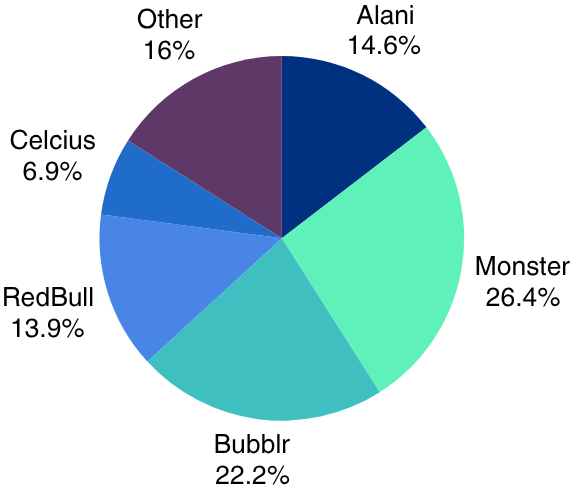
The most popular drink at MVHS is Monster, followed closely by Bubblr. Bubblr has 69mg of natural caffeine, while Monster has 160mg of caffeine. Both come with many different flavor options. Alani and Rebull are similar in popularity. If you’re wondering how energy drinks affect students, most students said they feel more awake after drinking one.Most other responses were that they make them feel anxious, jittery, tired later on, and/or more focused.
What about the students who don’t drink energy drinks? Well, 18 students said they never drink energy drinks. “I just don’t need them. Plus, they can mess with sleep. During the wrestling season, I’d wake up at 5 and sleep at 10. Never had an energy drink,” said sophomore Beck Oesterle.
Students say energy drinks are expensive, have bad ingredients, and have negative side effects. “Some cons of energy drinks are that sometimes they make me shaky or feel jittery. They are also expensive, and I don’t have a job,” said Weber.
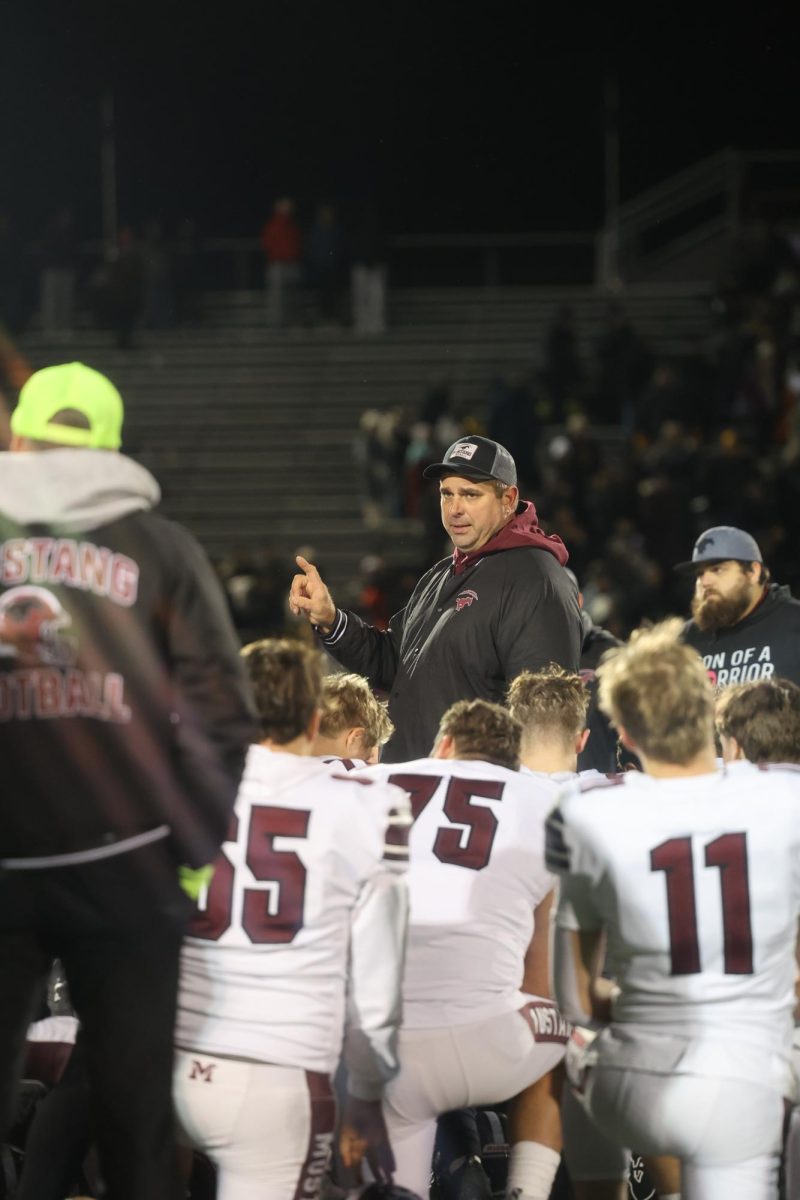
Also, some coaches are telling athletes to cut back on energy drinks because they affect performance. “In general, our coaching staff strongly discourages the use of energy drinks. They can cause short-term spikes in energy and focus, but the crash afterward can affect performance, hydration, and recovery. We focus on teaching athletes to fuel with real food, water, and sleep – things that actually support performance long-term,” said Preston Pedersen, the Mustang Strength & Speed Coach.
“During football season, if a player had an energy drink, we used it as a teaching moment or reminder to make better choices. The goal wasn’t punishment – it was education. We wanted players to understand why it mattered and how their decisions affect their body, performance, and team,” said Pedersen.
“During wrestling season, our coach, Trende, says we aren’t allowed to have energy drinks. If we do drink one, there are consequences of conditioning during practice,” said Josie Panos, a multisport athlete who enjoys energy drinks.
At the end of the day, energy drinks are a part of many high schoolers’ lives. Whether energy drinks are being used for taste, focus, or habit, they have clearly become a part of MVHS. For some students, they are a once in a while thing, but for others, it is something to avoid.