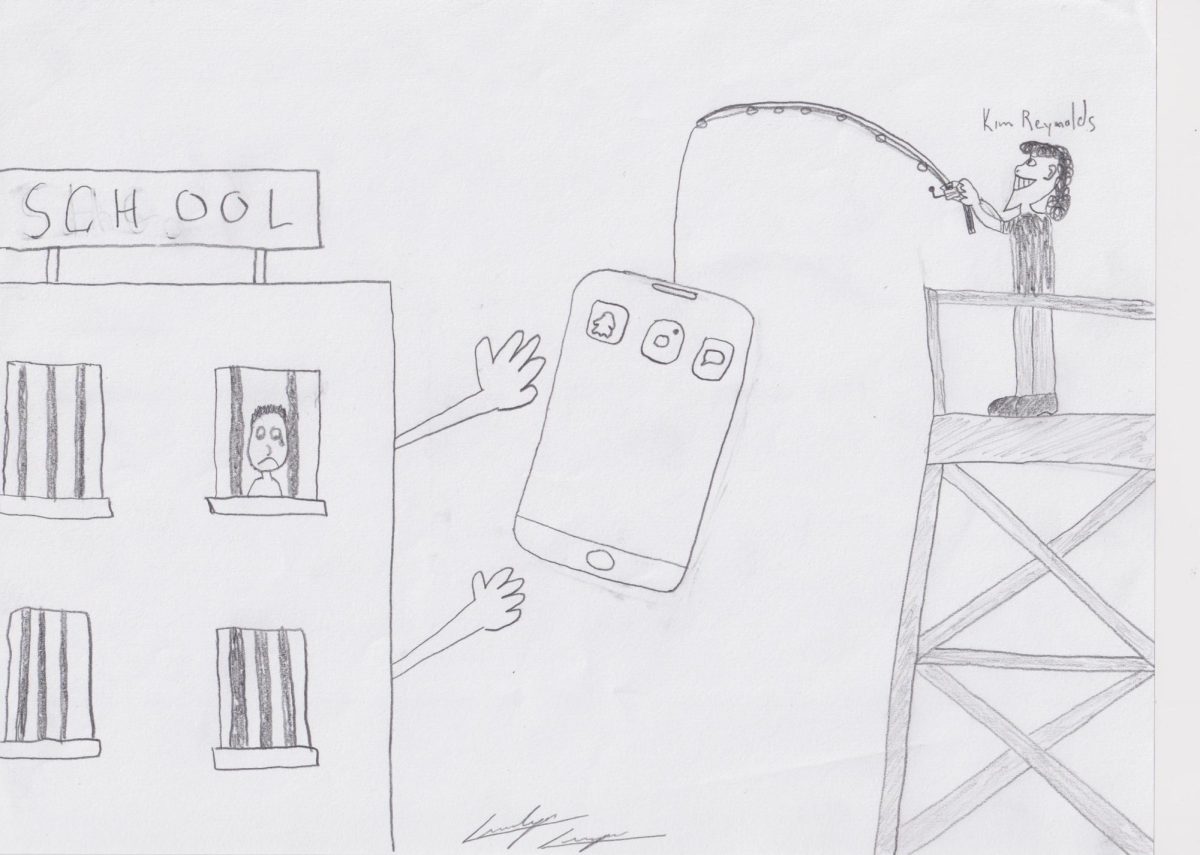
I believe that the new rules prohibiting cell phones in schools are more detrimental than beneficial, even though they are meant to help students concentrate and enhance their learning. Although phones can be distracting, outright prohibiting or severely restricting them ignores the numerous ways they can benefit students in the classroom. Everyday life involves phones, so rather than taking them away from students, schools ought to teach them how to use them responsibly.
I think these laws are detrimental because phones can be helpful educational tools. Students can use their phones to quickly look up information, check definitions, or use calculators. Instead they must use there computers which can be less convenient. Additionally, students have instant access to a plethora of educational apps and resources on the internet. Strict phone bans take away a tool that could really help education, rather than promoting this kind of learning. It seems odd that schools would ban one of the easiest ways to use technology in a world where it is ubiquitous.
Communication with parents is another problem. During the day, a lot of students use their phones to communicate with their families. A phone enables students to promptly notify their parents in the event that a practice is canceled, a ride is altered, or something unforeseen occurs. Students who don’t have access to their phones might have to wait until the end of the day or go through the school office, which can be slow and inconvenient. Easy communication during the day is a source of comfort for many families.
Another reason I believe these phone restrictions may be a bad idea is safety. Phones can be crucial in emergency situations. A phone enables students to get in touch with someone right away in the event of a medical emergency, a hazardous circumstance, or even something as basic as a student in need of assistance. Even though schools have their own emergency systems, having phones on hand allows students to get help fast if they need it.
Additionally, I believe that these stringent regulations convey the incorrect message. Schools are merely eliminating the issue rather than teaching students responsibility. Students will use phones in daily life, at work, and in college for the rest of their lives. Students should be taught in schools how to control distractions and use technology responsibly. Instead of teaching that lesson, outright prohibiting phones avoids it.
When used improperly, phones can undoubtedly be distracting. It can be quite problematic for students to text during class or browse social media instead of paying attention. But a total prohibition shouldn’t be the answer. Clear rules, such as prohibiting cell phones during class but permitting them during lunch or passing periods, would be a better strategy.
In my opinion, schools should focus on balance rather than strict bans. Phones can be both helpful and distracting, but learning how to use them responsibly is an important skill. By teaching students how to manage their phone use instead of banning it, schools would better prepare them for the real world.