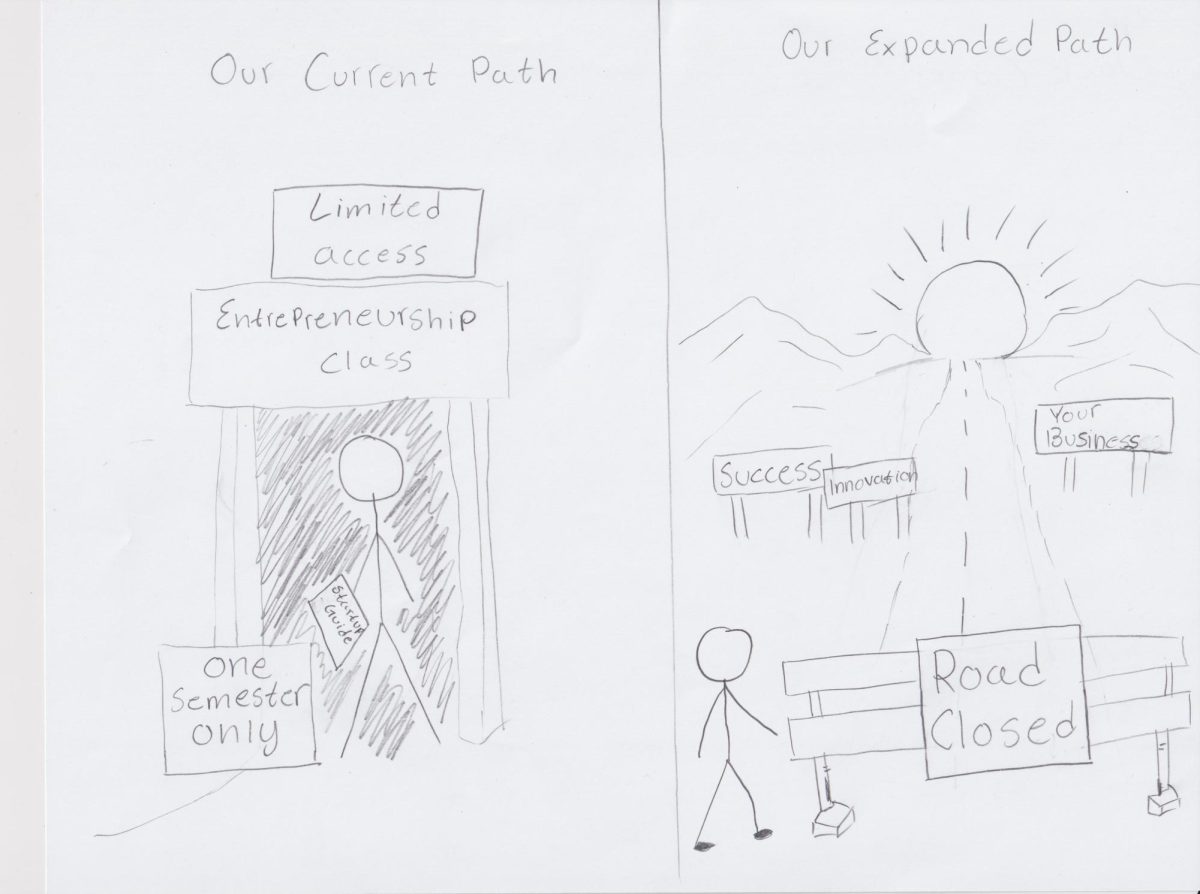
Our school offers one semester of entrepreneurship. That’s a start, but it is not enough. To prepare students for life after graduation, we should expand entrepreneurship education beyond a single introductory course.
Small businesses are not a niche part of the economy. According to the U.S. Small Business Administration, small businesses account for about 44% of the U.S. economic activity. Millions of Americans either own a business or work for one. At the same time, surveys from organizations such as Junior Achievement show that many teenagers are interested in starting their own business someday. If entrepreneurship plays such a major role in the economy and in students’ future goals, one semester barely scratches the surface.
In our current course, students are introduced to basic concepts such as profit, marketing, and supply and demand. Those topics matter, but entrepreneurship requires more than vocabulary. Writing a real business plan, building a brand, understanding taxes, managing risk, taking, and most importantly, trial and error. A single semester does not allow students to test ideas, make mistakes, and improve. Depth builds competence. Exposure alone does not.
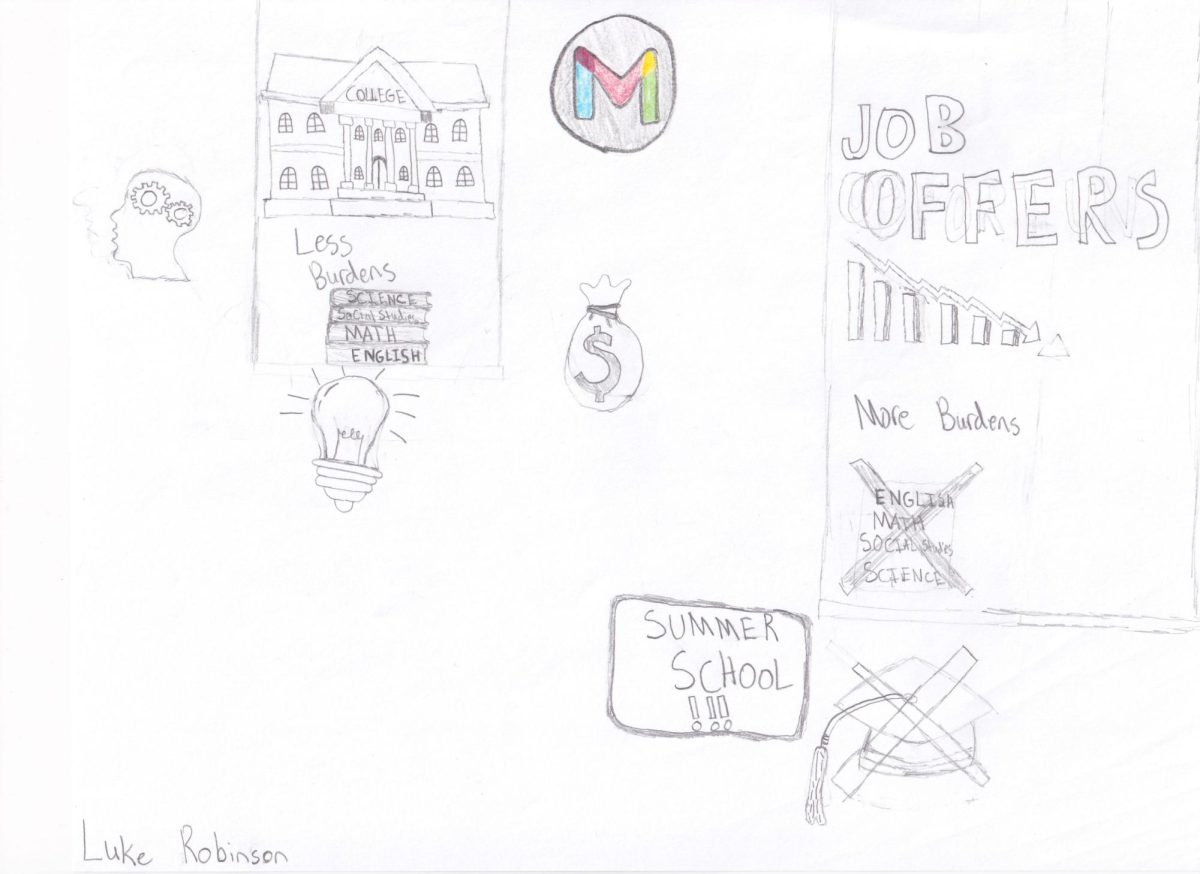
Some may argue that expanding entrepreneurship classes would take time away from core subjects such as math, science or English. That concern deserves consideration. However, entrepreneurship applies to them in practical and real-world ways.
Expanding these offerings would also promote real-world readiness. Not every student plans to attend a four-year college immediately after high school. Even those who will eventually face financial decisions, taxes, credit and contracts. Learning how businesses work and operate provides practical knowledge that benefits every graduate, whether they start a company or join one.
A reasonable solution would be to add an advanced year-long entrepreneurship course or an advanced class focused more on niche topics in the entrepreneurial field. Our school could partner with local business owners for mentorship or create a project in which students develop and present full business plans. These changes would build on what we already have without eliminating existing programs.
We often hear that high school is meant to prepare us for the real world. The real world includes innovation, financial responsibility, and problem-solving. If we are serious about preparing students for success, we should move beyond a single semester and provide the depth of entrepreneurship education our future demands.